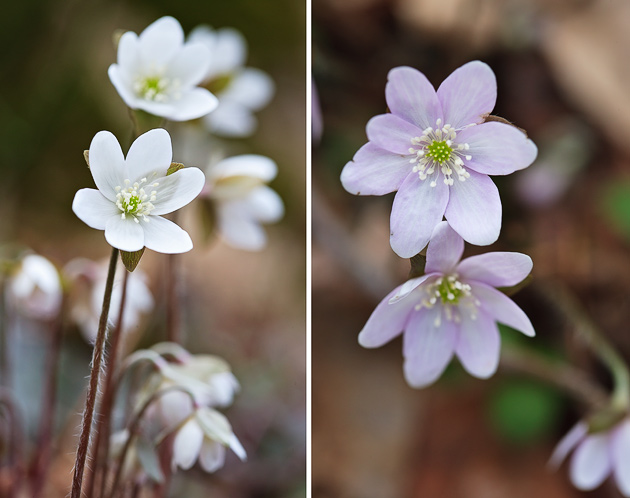
Hepatica (Hepatica acutiloba) is one of the earliest Smoky Mountains wildflowers. The pictures above and below were taken on March 8th along the Cove Hardwoods Nature Trail. On that day Hepatica was the only one of the wildflowers to be seen on the trail! Hepatica is...
Smoky Mountains Wildflowers: False Foxglove
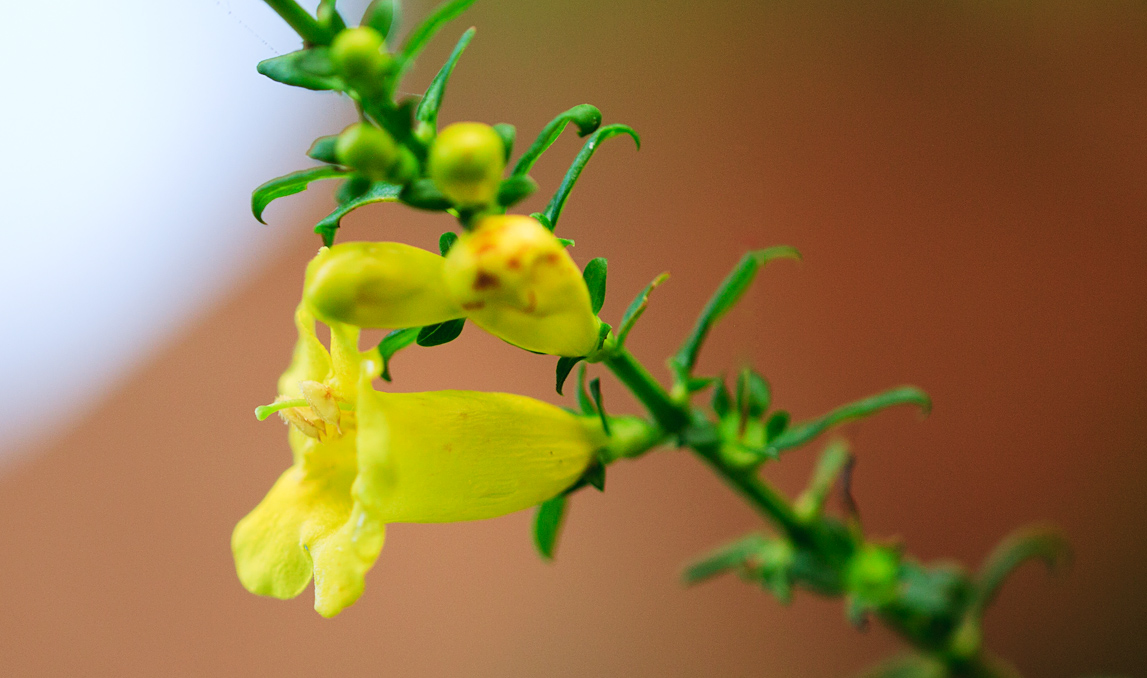
False Foxglove (Aureolaria laevigata) is an early autumn wildflower that blooms in September. It seems to be especially attractive to bumble bees, and on early morning walks there is always a loud buzzing as I pass by the cheerful bright yellow foxgloves. The bumble...
Smoky Mountains Wildflowers: the Asters of Autumn
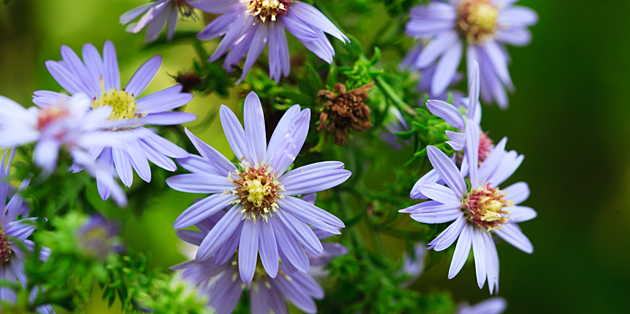
In Greek mythology, the goddess Astraea wept as she ascended into the heavens to become the constellation Virgo. Where her tears touched the Earth, Asters sprouted. Wildflowers of the Aster family brighten up the landscape in the Great Smoky Mountains National Park in...
Smoky Mountains Wildflowers: Sneezeweed
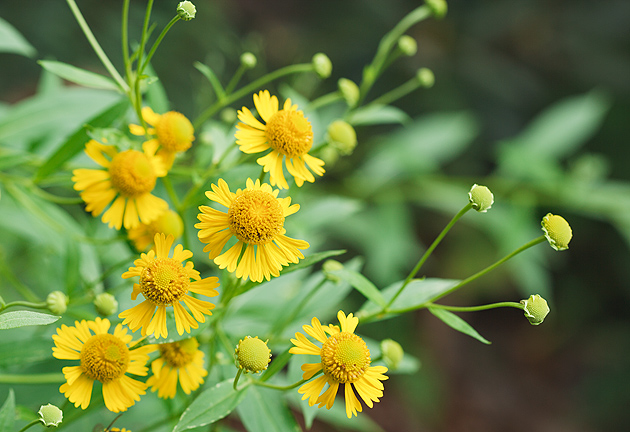
Sneezeweed, or Bitterweed (Helenium amarum) is a common and pretty roadside summer wildflower. If cows eat this plant, their milk will taste bitter, giving the plant one of it's common names. From the name Sneezeweed, you might assume a summer allergy problem. The...
Smoky Mountains Wildflowers: Pink Turtlehead
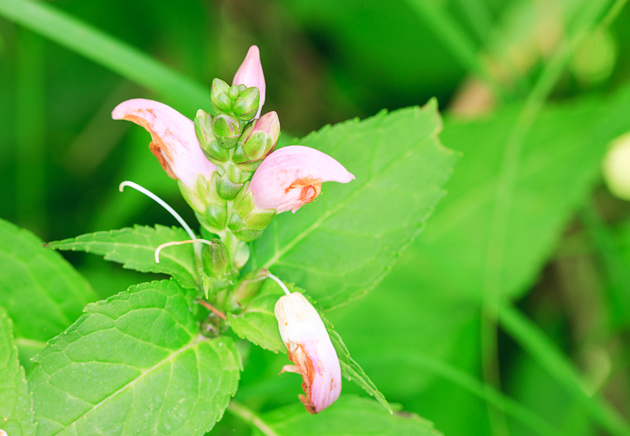
Pink turtlehead (Chelone lyonii) favors wet areas like seeps and stream banks. The image above was taken along the Clingman's Dome Road in the Great Smoky Mountains where water was draining from the steep bank above it. The botanical name Chelone derives from the...
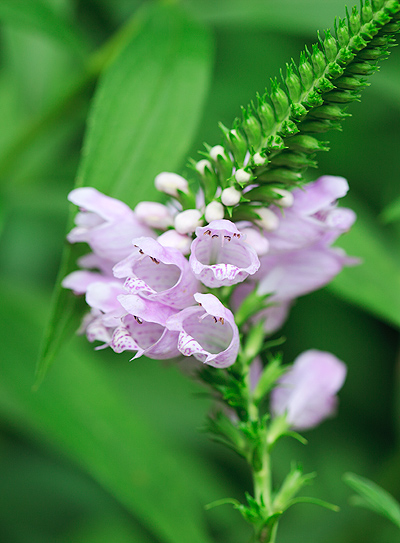
Smoky Mountains Wildflowers: False Dragonhead
False Dragonhead (Physostegia viginiana) is also called the Obedient Plant. Notice the way the flower buds line up perfectly in a column. If you twist the bloom, it will stay put, being obedient. For this reason, and because they are long-lasting, the plant is often...
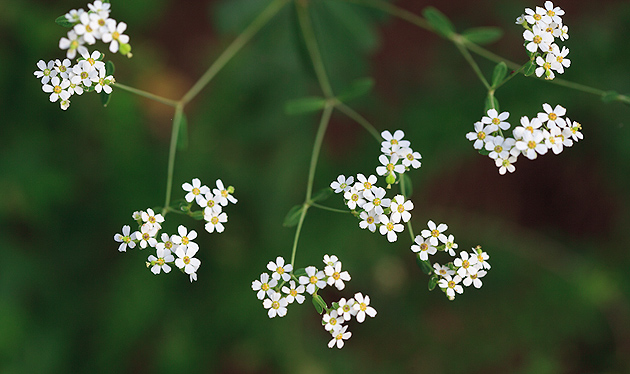
Smoky Mountains Wildflowers: Flowering Spurge
Flowering Spurge (Euphorbia corollata) is a large, bushy plant with many small flowers. It favors fields, roadsides, and open woods. The picture above was taken along the Cades Cove Loop Road in the Great Smoky Mountains National Park. The image picture was in the...
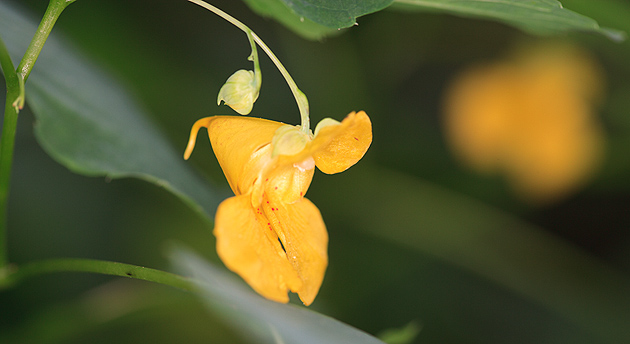
Smoky Mountains Wildflowers: Pale Jewelweed
We'll spend this week catching up on our review of the summer wildflowers found in the Great Smoky Mountains National Park. Pale Jewelweed (Impatiens pallida) is also known as Pale Touch-Me-Not. This is a large plant, up to six feet, favoring moist, shady wooded...
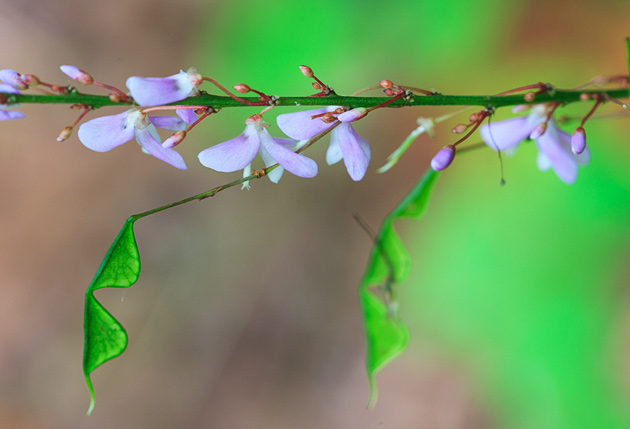
Smoky Mountains Wildflowers: Smooth Creeping Bush Clover
Smooth Creeping Bush Clover (Lespedeza repens) is a trailing, ground-hugging, member of the pea family that adds a beautiful accent to the dry woods of summer. The pictures here were taken along Porters Creek Trail in the Greenbrier section of the Great Smoky...
Smoky Mountains Wildflowers: Great Blue Lobelia
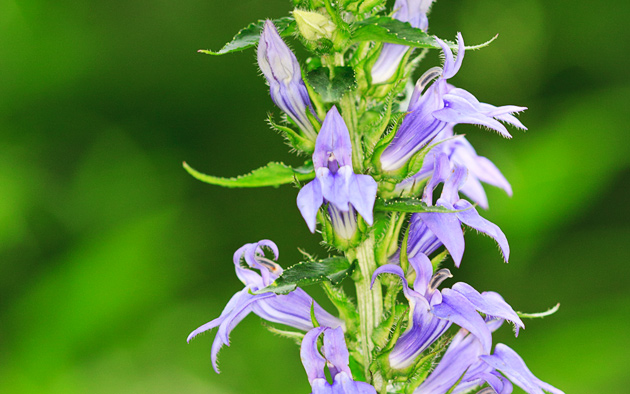
Great Blue Lobelia (Lobelia siphilitica) is a tall, single-stalk summer wildflower, blooming during late-summer in the Great Smoky Mountains National Park. It favors moist streambanks and roadsides. The pictures here were taken along the Greenbrier Road. The Latin...
Smoky Mountains Wildflowers: Southern Harebell
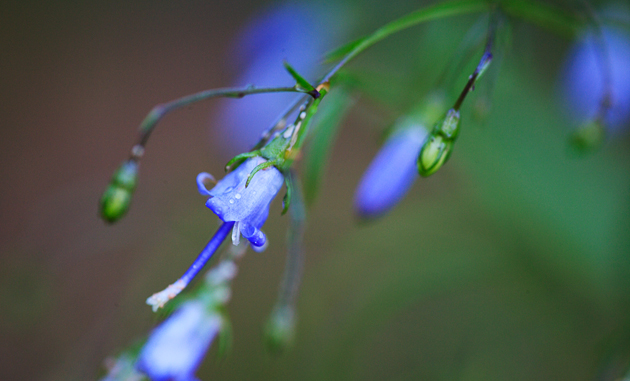
Southern Harebell (Campanula divaricata) inhabits dry, rocky slopes, trailside or roadside. The blooming period in the Great Smoky Mountains National Park is from July to October. Unless you are carefully examining your surroundings, you may miss this delicate beauty....
Smoky Mountains Wildflowers: Mountain Mint
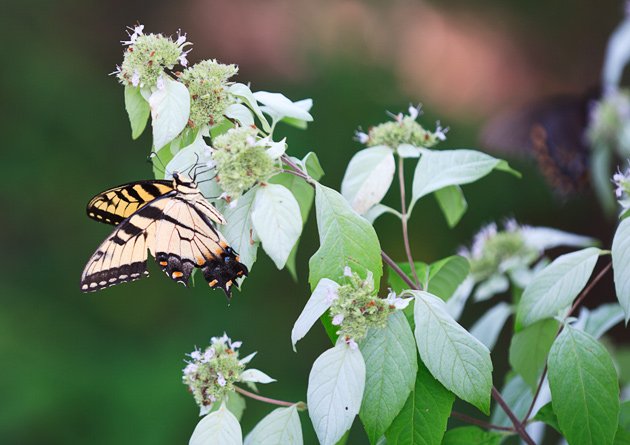
Loomis Mountain Mint (Pycnanthemum loomisii) is distinctive due to the appearance of being dusted with white powder around the bloom and upper leaves. The name Pycnanthemum means "compact flower," referring to the dense flowering heads common to the mints. This is a...